
Best Waist-High Compression for POTS: How to Choose a Wearable Fit
Quick answer
The best waist-high compression for your POTS plan is the one that covers the intended areas, fits every measurement, and can be worn safely for the routine that matters to you. A waist-high garment reaches from the legs to the waist; knee-high socks stop below the knee. That extra coverage can be useful to discuss when lower-leg socks do little for an upright goal. It also adds dressing effort, heat, fit points, and bathroom friction. No retail pantyhose has been proved best for everyone with postural orthostatic tachycardia syndrome (POTS), a condition involving an unusual heart-rate rise and symptoms on standing.
Three manufacturer-documented formats give useful shopping roles below: JOBST Relief for a range of ready-to-wear style and pressure choices, Truform 0375 for a specifically labeled 15-20 mmHg opaque pantyhose, and Sigvaris Essential Opaque for a maker-listed 20-30 mmHg pantyhose with several length and size options. These are comparison examples, not clinical endorsements. The maker pages establish catalog features, not POTS outcomes, current checkout availability in your size, or actual abdominal pressure.
If you are still choosing between socks, thigh-high, abdominal, and waist-high coverage, use Best Compression for POTS first. This guide begins once waist-high is a plausible format in your care plan.
Why consider waist-high coverage?
Knee-high socks can be easier to wear, but they do not press on the thighs or abdomen. Thigh-high stockings reach the upper legs but stop below the waist. Waist-high tights extend through the legs to the waist. The waistband's pressure on the abdomen depends on construction; the word "waist-high" alone is not a measured belly-pressure claim. A separate abdominal binder is another format, not a substitute for leg compression if your plan requires it.
In a 2021 study, 30 adults with POTS completed four brief tests on a table tilted toward standing. The order of no compression, lower-leg compression, abdomen-and-thigh compression, and full abdomen-and-leg compression was changed at random. Average upright heart rates were 109, 103, 97, and 92 beats per minute, respectively. Symptoms improved as tested coverage increased. These were study coverage arrangements, not four retail products. The abdomen-and-thigh condition was not a belly-only binder, and the results do not prescribe a shopping pressure or demonstrate durable daily benefit. [4]
A 2025 community study analyzed 26 female participants wearing their own waist-high tights. Short standing tests showed lower heart rate and symptom scores with tights on, including after several hours of wear. The order of garment-on and garment-off tests was fixed, participants knew when they wore the tights, and garment designs varied. The study did not compare the three products below or prove improvement in months of daily functioning. [5]
A 2026 study analyzed 18 female participants wearing mixed abdomen-focused garments that included shapewear, shorts, binders and corsets, some also reaching the upper thighs. It supports discussion of abdominal coverage but does not identify a waist-high winner. People unable to tolerate compression for the study period were excluded. Wearability is therefore a real evidence limit, not merely a shopping preference. [6]
For the question of whether compression helps POTS at all, see Do Compression Socks Help POTS?. This guide focuses on which waist-high construction can realistically fit a plan.
Three evidence-ready shopping roles
The manufacturer sources below were checked on November 4, 2026. A catalog page is not proof that your selected size, length, toe, color, and pressure combination is available to buy today. Confirm the exact variant at checkout or with a medical-supply retailer, and follow the selected maker's chart. None of these products was identified as a tested garment in the POTS studies above.
| Shopping role | Manufacturer-documented example | Why it earns a place | Important limit |
|---|---|---|---|
| Ready-to-wear choices within one line | JOBST Relief waist-high/panty style | JOBST lists waist-high alongside knee-high, thigh-high and chap styles and lists 15-20, 20-30 and 30-40 mmHg options across the line | Verify the exact waist-high variant and its pressure, size, length, toe and availability; line-level options may not all combine |
| Specifically labeled lighter-pressure pantyhose | Truform 0375 opaque microfiber pantyhose | The maker identifies this exact pantyhose as 15-20 mmHg and documents graduated construction, knit-in heel and toe, flat panty seams and a ventilated panel | A softer or lower label does not prove sufficient support for your goal; confirm size, color, stock and return terms |
| Length and size choice for an opaque pantyhose | Sigvaris Essential Opaque pantyhose | The maker lists a 20-30 mmHg class, multiple short, long and petite size codes, closed toe, and a cotton-lined gusset | Its page also lists 30-40 mmHg, which is not a default POTS choice; confirm the precise size/length/pressure combination and medical suitability |
JOBST Relief: a starting point for ready-to-wear options
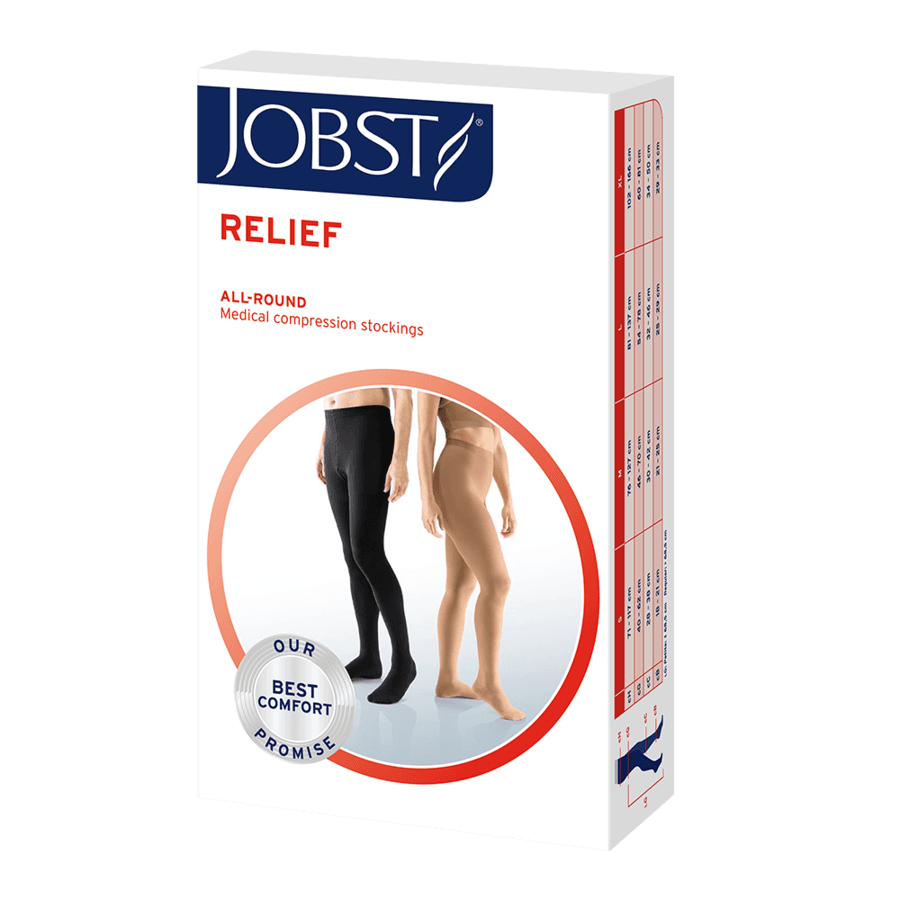
JOBST's official Relief page identifies a waist-high style, available ready-to-wear, and states that the line includes 15-20, 20-30 and 30-40 mmHg compression classes. It also shows black and beige colors, open and closed toe options, and several sizes. That breadth can help a shopper ask a retailer for the exact waist-high configuration that matches a clinician's plan. It does not mean every listed pressure, color, toe and length is sold in every waist-high size. JOBST describes the range for venous conditions, not as a POTS-validated product.
Consider it when you need a manufacturer-documented ready-to-wear waist-high line and want a fitter to check the precise option. Pause when the line-level page does not show the exact SKU, dimensions, or checkout stock you need. Do not pick 30-40 mmHg because it appears in the catalog; pressure is a separate clinical decision. JOBST's own page says healthcare professionals make individual suitability decisions based on condition and tolerance.
Truform 0375: a clearly labeled 15-20 mmHg pantyhose
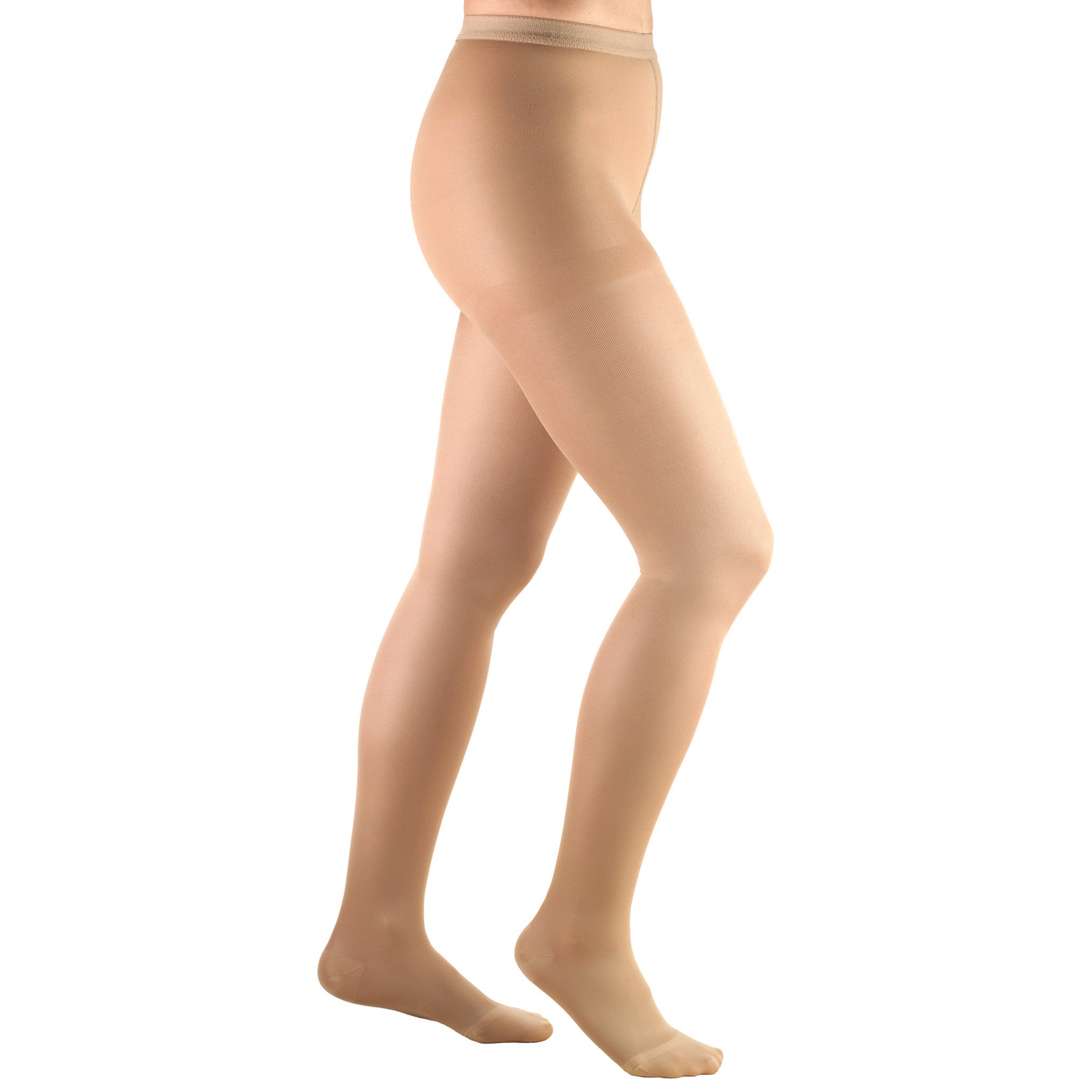
Truform identifies model 0375 as opaque microfiber compression pantyhose at 15-20 mmHg. The official listing documents graduated compression, knit-in heel and toe, flat panty seams, a ventilated cotton panel, and 85% nylon/15% spandex. Those are useful construction facts if a lighter labeled range, seam comfort, or an opaque look is relevant to the plan. The maker's general claims about comfort are not evidence that this garment will feel comfortable to you or treat POTS.
Consider it when your clinician agrees that this pressure range and waist-high coverage suit the goal and you can match its chart. Pause when you need a different prescribed pressure, the selected size is unavailable, or the full-leg dressing effort remains unrealistic. A 15-20 label does not tell you how much pressure the panty portion applies to the abdomen.
Sigvaris Essential Opaque: more listed length choices
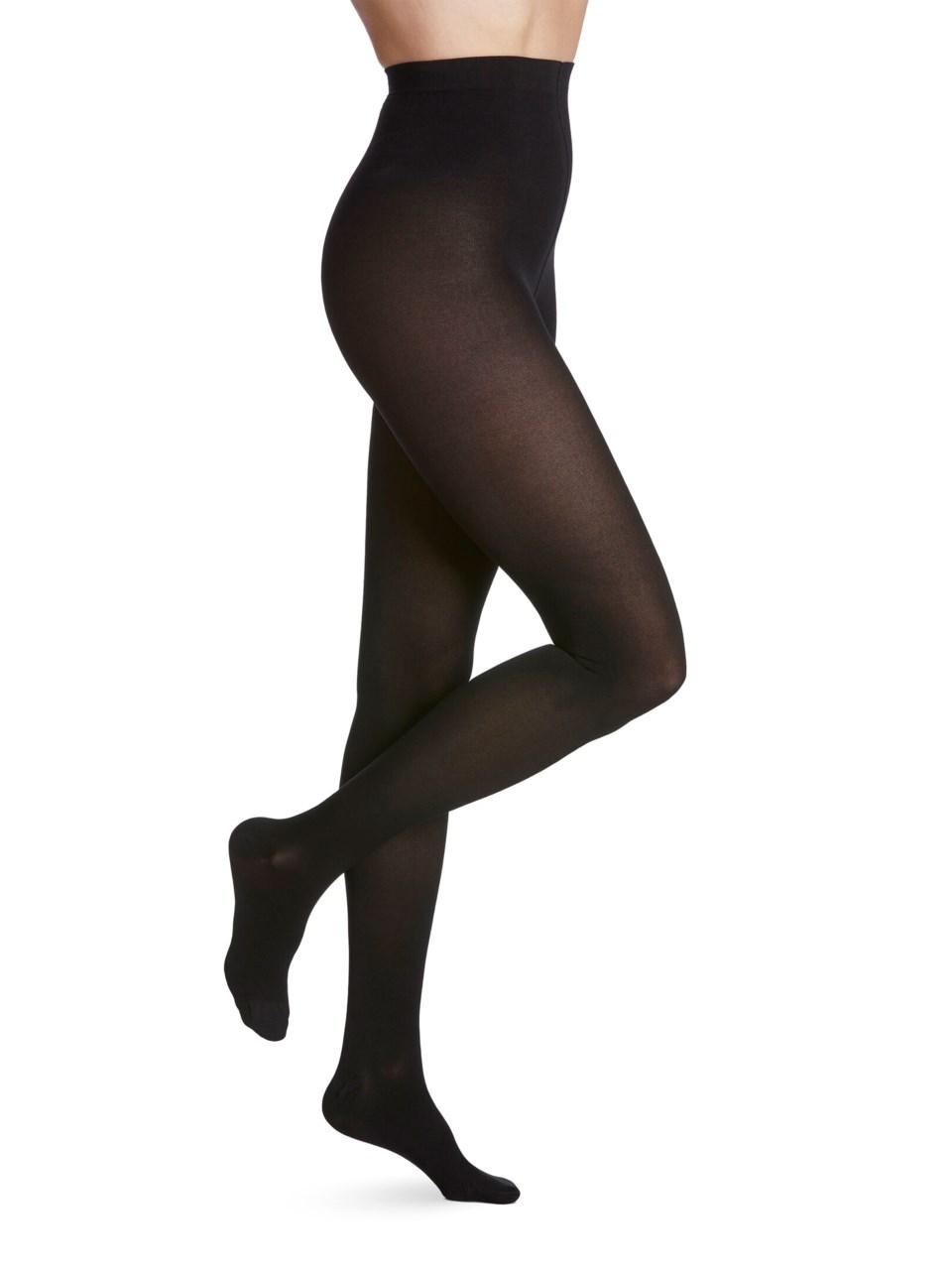
Sigvaris lists Essential Opaque pantyhose with a 20-30 mmHg option, plus 30-40 mmHg, and several size/length codes including short, long and petite selections. The official page lists a closed toe, a cotton-lined gusset, and nylon/spandex composition. This is a useful comparison when a standard length or shape has been the fitting obstacle. A catalog of size codes is a reason to check the chart, not proof that one code will fit all your measurements. The page discusses venous and edema uses, not a proven POTS outcome.
Consider it when your pressure plan and leg measurements make a 20-30 mmHg pantyhose relevant and the listed length choices address a real fit issue. Pause when a medical assessment has not established a suitable pressure or the exact selected variant cannot be confirmed. Do not assume the 30-40 option is a stronger answer to upright symptoms.
Choose the garment by the problem it must solve
If your socks help your calves but not the main upright task: Ask whether fuller leg or abdominal coverage belongs in your plan before comparing brands. A waistband does not guarantee abdominal pressure. If full-leg wear feels unrealistic, compare the practical fit and tolerance of an abdomen-focused garment with your care team before buying another style.
If you already know waist-high is intended: Start with the exact prescribed or clinician-discussed pressure range, then check ankle, calf, thigh, hip, waist and leg length against the selected maker's chart. Different styles require different measurements. A trained fitter can help; a clinician assesses medical suitability. [7] [8]
If dressing effort is the obstacle: Ask about a donning aid, construction, fabric, or another format rather than sizing up or down by guess. Consider heat, seated comfort, bathroom access and washing burden before ordering. Check return or exchange terms for a tried-on compression garment. A garment that cannot be worn for the intended routine may be a poor choice even if its coverage looks ideal.
If knee-highs are already working well: Keep following your care plan. A short study's group average is not a reason to replace a comfortable, useful garment. If your goal has changed, bring that observation to the clinician who advised you.
This guide does not claim that any listed model is the "most effective" for POTS. Its roles are based on manufacturer-documented construction and meaningful fit differences. For a wider garment-format comparison, use Best Compression for POTS.
A purchase checklist that protects the decision
- State the goal: Which safely tolerated upright activity or leg symptom is compression intended to help?
- Confirm the format: Is the plan fuller leg coverage, abdominal coverage, or both? Does the selected garment actually cover that area?
- Confirm medical suitability: Ask a qualified clinician about pressure and relevant circulation, sensation, skin or heart concerns. A size chart cannot answer these questions.
- Measure for the exact design: Use the maker's current chart for ankle, calf, thigh, hip, waist and length as required. Ask a fitter when measurements point to different sizes.
- Confirm the selected variant: Check product name, pressure range, size, length, toe and color at the actual seller. Do not infer stock from a catalog overview.
- Check daily use: How hard is it to put on, sit in, use the bathroom in, wash and return? Know the seller's try-on and exchange terms before paying.
Use ordinary, safely tolerated activities to notice whether a clinician-recommended garment helps. Record what you wore, how long, whether the task felt easier, and any discomfort. Heat, meals, sleep, fluids, activity and medicines can change symptoms. Do not stand through faintness, stop prescribed compression, or change medicines to create a cleaner comparison. A few observations support a care conversation; they do not prove cause and effect.
Safety before wearing a new full-length garment
Compression may require an individualized plan or be unsuitable with arterial circulation problems, reduced sensation, fragile skin, or certain heart conditions, including heart failure. Incorrect fit can cause pain, skin damage or rarely nerve injury. Ask a qualified clinician about medical suitability if these concerns apply. Remove a garment that causes new pain, numbness, marked color change or skin damage and seek advice. Do not size down to make it feel stronger. [9]
If you feel faint, sit or lie down. If you have fainted, arrange medical assessment. Emergency help is needed if someone is not breathing or cannot be woken within one minute, has not fully recovered or has difficulty speaking or moving, has chest pain or a pounding or irregular heartbeat, has a serious injury or seizure, or fainted during exercise or while lying down. Do not drive yourself to emergency care. [10]
New, unexplained pain or swelling in one leg needs urgent medical advice. Leg symptoms with chest pain or breathlessness require emergency care; do not drive yourself. New or severe chest pain or severe breathing difficulty also needs emergency care on its own. These symptoms are not a reason to buy stronger compression. [11] [12] [13]
Frequently asked questions
Are waist-high tights better than knee-high socks for POTS?
They cover more of the body, and broader tested coverage had larger average changes during short POTS tests. That does not prove a retail waist-high pair is better for every person or that the benefit lasts through daily life. Fit, comfort, medical suitability and the goal matter. [4]
Which mmHg should I buy?
The studies here do not establish one universal retail pressure for POTS. A graduated legwear label generally refers to ankle pressure, not uniform pressure everywhere or a specified abdominal pressure. Follow your clinician's advice and the selected maker's chart. Do not choose a higher number merely because a product line offers it. [14]
Does every waist-high style compress the abdomen?
Not to a known, interchangeable amount. A garment reaching the waist may have a holding waistband or a different torso construction. Ask the maker or fitter what the selected design actually provides. If abdominal support is the main goal, compare it with a distinct abdominal garment rather than assuming pantyhose and a binder are equivalent.
What if a pair fits my legs but digs in at the waist?
Do not wear through pain or buy a smaller size. Recheck the maker's waist and hip measurements, length and construction. Ask a fitter or clinician whether another size or format is appropriate. A one-piece garment must fit all relevant areas, not just the calf.
Bottom line
Waist-high compression is worth discussing when fuller leg coverage matches a POTS care goal and the garment can be fitted and worn safely. JOBST Relief, Truform 0375 and Sigvaris Essential Opaque offer three manufacturer-documented shopping roles, not a clinical ranking. Confirm exact variants and medical suitability, then judge the selected garment by a useful everyday goal and its real wear burden. If full-length wear is not workable, discuss another coverage plan rather than forcing a purchase.
How we chose and researched
CompressionLane selected examples with manufacturer-controlled pages that identify a waist-high or pantyhose format and useful pressure or construction details. We reviewed original POTS compression studies, NHS fitting and urgent-care guidance, manufacturer pressure information, and an international compression-safety consensus. We did not buy or wear the garments, test products in POTS, verify live checkout inventory for every variant, or conduct a medical review.